Why We Go
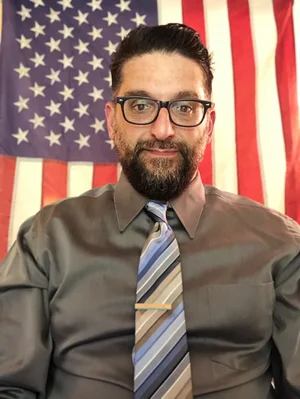
As I am writing this, I am still shaking off the jet lag while trying to catch up from being away from the office for a week to attend the 74 th Bi-Annual National Convention in LA. I have noticed a lot of division on how the Convention Delegation voted on various issues, as well as the time spent debating the issues. A division in our Union you say? Incredible, but true. However, I must say that, once again, I am proud of the way my Union handled it. Everyone, for the most part, was well-behaved and respectful.
The President, Brian Renfroe, announced that he was not running. I feel it was the right decision ultimately and I’d like to think that he did it for the right reason, because like me, he loves his Union. I have been going to National Conventions since the 64th Biennial Convention that took place in Boston, Massachusetts in 2003, led by NALC President William H. Young.
The NALC has been hosting National Conventions ever since its founding meeting held in Milwaukee in 1889. Conventions were held every year from 1889 until 1903. Then the Union started holding biennial conventions which continued to the present day, with the exception of skipping one year during World War II and for COVID.
The 1996 Orlando convention gave the NALC Executive Council the power to select convention sites but to continue the system set out in the NALC Constitution of choosing cities on a rotating regional basis. The idea is to give the Union greater leverage in negotiating with hotels and convention facilities by being able to select a site several years in advance. The council vote follows a report from the national secretary-treasurer of the findings of the Convention Site Committee on information on cities considered. NALC members have met in a national convention to set the policy and direction of the national Union, to discuss political measures that affect letter carriers and their families and to find solutions for problems they face during the course of their working day.
Despite the debates on Tik-Tok and Facebook, the Convention is not a vacation nor is it solely for one facet or aspect of debate. There are a number of duties that the delegation needs to attend to and they are all important.
The NALC National Convention serves as the supreme governing body of the entire Union. The convention brings together elected delegates from every local branch to dictate the long-term policy and leadership structure of the organization. The primary duties and responsibilities executed during the NALC National Convention are divided between the collective powers of the convention delegates and the individual responsibilities of the delegates themselves.
As the ultimate authority of the Union, the general assembly at the convention is responsible for three foundational tasks:
1. Amending the NALC Constitution: Delegates debate, vote on, and adopt proposed changes to the written constitution that governs the national Union, state associations, and local branches.
2. Setting National Policy and Resolutions: The convention reviews, debates, and passes resolutions submitted by local branches regarding Union policy, collective bargaining strategies, legislative priorities, and postal operations as well as reads the committee reports for the rules of the convention itself, reports on the finances of the Union and reports from almost all the other committees from our great Union.
Some of the Resolutions that are entered into the Delegate body are:
Contract resolutions - branch proposals submitted to national leadership to shape collective bargaining, target specific articles of the National Agreement, and mandate Union negotiating priorities. This year, Branch submitted Resolutions on barring considering of FLMA covered Sick Leave in the requirement of selling Annual Leave back to the Service, extending EAP entitlements and TSP participation to retired Letter Carriers and Mandatory Union notification when discipline is issued. All four of these resolutions passed!
Legislative resolutions - formal proposals that set the Union’s official policy and goals regarding federal laws, postal operations, and worker protections, guiding Union leaders on which congressional bills to support or oppose. This Year, the Delegation passed a Legislative resolution to fight for Area Wage increases!
General resolutions - National Association of Letter Carriers (NALC) general resolutions are official proposals submitted by local branches or state associations to direct Union policy; they cover internal Union democracy, operational standards, and worker benefits.
Official Positions - formal policy stances, goals, and operational directions voted on and approved by delegates at the National Association of Letter Carriers biennial conventions. They guide Union leadership on collective bargaining, legislative lobbying, and internal Union rules.
Constitution Amendments - formal changes to the Union’s governing rules. These modifications adjust officer duties, election procedures, or branch structures, and they can only be proposed and approved by elected delegates during the Union’s biennial national convention. This year, Branch 6000 passed a constitutional Amendment to allow the NALC’s MBA to sell Life Insurance that would cover grandchildren, nieces, nephews and stepfamily members!
3. Nominating National Officers: At every other biennial convention, delegates officially nominate candidates for all executive board Officer positions and National Business Agents for four-year terms. This Convention was particularity exciting as there were four (4) candidates nominated for NALC President, two of which are part of a slate of National Officers.
Additionally, elected delegates are responsible for:
Official Registration - Each delegate must individually register at the convention site using a photo ID and a physical credential card signed by their local branch president and secretary.
Floor Voting and Debate - Delegates must attend daily general business sessions to listen to arguments, participate in debates, and cast votes on all constitutional amendments and resolutions.
Committee Participation - Selected delegates serve on standing and convention-specific committees (such as the Credentials Committee or Mileage and Per Diem Committee) to process Union business and present organized reports to the general floor.
Educational Advancement - Branch Delegates are expected to attend the educational and training workshops held before and after the daily business sessions to bring valuable labor and policy knowledge back to their branches.
By the time you read this, I hope we have a multitude to be thankful for. Remember that Area Wage increases are now on the menu. Now more than ever, I suggest you find it in your heart as well as your wallet and contribute to the Letter Carrier Political Fund (LCPF).
Happy Thanksgiving, Happy Holidays. May God bless the Letter Carriers!